Monday, May 21, 2012
Structuralism Extracts Meaning From Phenomena
Conflicting Opinions
Metaphorically speaking, it has been said that the structuralists have built
incredible mansions for people to live in and, indeed, the mansions have been
built and the lights are on, but, we might want to ask the question: Is anybody
living in these mansions? Out of the five structuralists I will discuss only
Chomsky and Piaget appear to be actively seeking the mansion's inhabitants. As
the above lesson on Kant cautions, finding these inhabitants takes extraordinary care.
Structuralists understand experience on two levels. Phenomena are first
encountered by a given arbitrary level of experience and second, phenomena are
then integrated (transformed) into communicable levels of experience. Thus, structuralism prescribes a method for understanding how to extract meaning from phenomena; however, on the whole, structuralism constitutes a diverse agenda of pursuits. By way of an introduction, De George offers the following perspective on structuralism:
"Structuralism has been described as a method, a movement, an intellectual fad,
and an ideology. Each of these characterizations is in part valid. For
structuralism is a loose, amorphous, many-faceted phenomenon with no clear lines
of demarcation, no tightly knit group spearheading it, no specific set of
doctrines held by all those whom one usually thinks of as being associated with
it. It cuts across many disciplines--linguistics, anthropology, literary
criticism, psychology, and philosophy. For some it gives hope of uncovering or
developing a common basic approach to the social sciences, literature, and art
which would unify them and put them on a scientific footing, much as the
"scientific method" grounds and unifies the physical sciences." [ De George and
De George, The Structuralist: From Marx To Levi-Strauss, 1972, p. xi]
In a l986 lecture delivered at the University of Melbourne, Australia, the
renown sociologist Anthony Giddens had the following to say about structuralism:
"Structuralism, and post-structuralism also, are dead traditions of thought.
Notwithstanding the promise they held in the fresh bloom of youth, they have
ultimately failed to generate the revolution in philosophical understanding and
social theory which once was their pledge." [ Anthony Giddens, Social Theory and
Modern Sociology, 1987, p. 74]
I disagree with Giddens!
Sunday, May 20, 2012
Kant’s Categories—The Consequences
Structuralism And Kant's Philosophy Continued
The claim that one will’s, via Kant’s categories, knowledge of the universe
is more than an arbitrary assessment by Fichte on Kant's presupposed ego.
The science of Einstein, Bohr, Schrodinger and Heisenberg has
demonstrated the error in Kant's constitutive and hence necessary relationship
between the categories of understanding and reality. Thus, science has taught us
that mental categories, if indeed there are such things, are only interpretive
for the measurable observable events that we identify with reality. Within the
context of the scientific method, these events are hypothetically postulated and
aposteriorily (to use Kant's terminology) verified. Consequently, it is not the
facts that imply the theory; rather, it is the theory that implies the facts.
The breakdown of the necessary relationship between Kant's categories and
sensed experience does not invalidate Kant's distinction of sensed space and
time and mathematical space and time. Kant's philosophy, not withstanding its
assumption of necessity, is still a major force in the world today.1
It is unfortunate, however, that Fichte's identification of the will with Kant's
practical ego helped to supplement the deterministic portions of Hegel's
idealism and in no small way contributed to the totalitarian ideologies of Nazi
Germany and the U.S.S.R. In a nutshell, an ego free from the constraints of
reason, motivated purely through the expression of the will, identifies the “is
of society” with the “ought for society.” This, in turn, became the determinism by
which Hegel's "world spirit" and Marx's "dialectical materialism" swallowed up
the individual. What began in Kant as an attempt to restore and secure the
notion of a person's free will, ended up contributing to in the brutal
consequences of fascist and communist dictatorships. Here we once again see the
irony of the political animal called man. But, moving in another direction,
that is, remaining under the umbrella of Kant's transcendental ego, the more
modern movement of structuralism has come to the fore.
[1. In his ontological structuralism, W.V. Quine, a person of major significance
in the defining aspects of today's philosophy of science, establishes a Kantian
position when he takes structure (mathematical form) and events of confirmation
to be the ultimate ground for knowledge. Quine informs us that the structural
aspect (the categorical aspect) of this knowledge as it relates to verification
is, in addition to being Kantian, is also uncertain. He says, "Science ventures
its tentative answers in man-made concepts, perforce, couched in man-made
language, but we can ask no better. The very notion of object, or of one and
many, is indeed as parochially human as the parts of speech; to ask what reality
is really like, however, apart from human categories, is self-stultifying.
.....We saw that reference (structure) could be wildly interpreted without
violence to evidence. We see now that that is just part of a wider picture.
Presumably yet more extravagant departures, resistant even to
sentence-by-sentence interpretation into our own science, could conform equally
well to all possible observations." W.V. Quine, The Journal Of Philosophy,
Volume LXXXIX, NO. 1, January l992]
Saturday, May 19, 2012
Structuralism And Immanuel Kant's Philosophy
"Whatever we call reality, it is revealed to us only through the active
construction in which we participate." (Ilya Prigogine, Order Out Of Chaos)
Structuralism emerges from the elementaristic side of the holism/elementarism
debate as an extension of the neo-Kantian position. Form, within this tradition,
takes precedence over content, but in so far as structure itself is a holistic
concept, the actual locus of structuralism in relation to the holism/
elementarism debate is somewhat ambiguous. I believe that within this ambiguity
will be found a resolution to the holism/elementarism debate. In order to bring
this debate to a close, however, we must first look at the various
structural models that have been described in linguistics (Saussure and
Chomsky,) anthropology (Levi-Strauss,) psychology (Piaget,) and philosophy
(Foucault.) My description of these various forms of structuralism will
concentrate in the areas that have a direct bearing on bringing this debate to a
satisfactory conclusion. With that end in mind, I would like to begin by taking
a peak at the philosophy of Immanuel Kant.
Kant, in his attempt to synthesize the rationalist thought of Descartes and
Leibnitz with the empirical thought of Locke, Berkeley, and Hume, understood
sense experience to be manipulated within the inherent structure of mental
categories. In his analysis of this structure he concluded that there is more
than one kind of knowing (Critique of Pure Reason, 1781, Practical Reason,
1788, and Judgment, 1790) but the major importance of Kant's analysis is found
in his understanding of the logical consistency and necessity of both sensed
space and time and mathematical space and time. This aspect of Kant's
philosophy, although it represented a major success for Kant, in retrospect, is
not so well received.
Just as Locke was driven to his theory of ideas by the consequences of Newton's
deterministic universe, Kant had to face a similar determinism. It was not with
atoms and forces which his determinism had to contend, rather, it was with the
determined nature of knowledge itself. Kant's transcendental ego, when pursued
to its logical conclusion, did not allow for individual freedom. He accounted
for man as knower of the universe, but he did not account for man as a free
moral agent within the universe. Kant used the presuppositional method to solve
this problem: "It is impossible to conceive anything at all in the world, or
even out of it, which can be taken as good without qualification, except a good
will." [Immanual Kant, The Moral Law, 1948, p.59]
In other words, he presupposes free will to allow for moral action i.e. Kant's
practical ego. This is a key concept because upon reading Kant the German
champion of freedom, Fichte, was able to show that it was not the categories of
understanding which allowed a person to know the universe, it was the person's
own individual will that will's knowledge of the universe through the
categories.
Friday, May 18, 2012
Reciprocal Movement Of Context Dependent Forms—Raw Material Of Civilization
Preface And Preliminary Remarks--Structuralism Paper Concluded
April 1994
When I started this paper I searched for a theme broad enough to enable me to
discuss structuralism within the context of my own philosophy. After
considerable reading on structuralism I discovered the holism-elementarism
debate as it is described in Don Martindale's book, The Nature and Types of
Sociological Theory. I recognized this theme as doable for me because it allows
for the extrapolation of the structural aspects of the holism/elementarism
debate as it arises in every historical epoch. However, it soon became clear to
me that the dichotomy of holism/elementarism did not suit my needs as well as
the synchronic/diachronic distinction, or the defining characteristic of
structuralism, so, for the most part, I have used the synchronic/diachronic
distinction throughout. However, midway into my paper the synchronic/diachronic
distinction morphs into an even more general distinction. Ultimately, this
morphed version can be identified in the "who participates in what" dichotomy,
or, more specifically, in the "reciprocal movement of context dependent forms."
In either case, however, it all leads to that bridge which, on one level,
connects reason to emotion, while, on another level, separates reason from
emotion. A lot of territory is covered here, so I will begin by letting
Martindale introduce the language of holism/elementarism.
Introduction To The Holism-Elementarism Debate
"Human society places unusual demands on socialization, for without the
continuous manning of its positions as they become vacant through illness,
retirement, and death, it would simply melt away. However, since most societies
only require a fraction of what any given individual could offer, much human
potential is unused. A major problem confronting every human society is to
prevent unused human energy and imagination from being employed against it. All
human societies also place demands on the means of social control. The more
complex the society the more serious its control problem.
"The representatives of every society inevitably seek to strike some kind of
balance between the latitude or freedom permitted to the individual and the
requirements of society. The theoretical limits represented by anarchism and
authoritarian absolutism are rarely approached in practice. Furthermore, the
line between individual and collective requirements is constantly shifting. In
the formative period of a new collectivity considerable scope is usually
permitted the individual. Often when a collective is in danger of falling apart
in the last attempt to retain control authorities may place a virtual
straitjacket of restrictions on the membership. When this fails the result may
be revolution or collapse into anarchism.
"There are few decisions more basic made by students of human social life than
the comparative importance they assign to the individual and to the collective.
Do they take the social system or the individual to be the primary reality? All
students of human social life inevitably recognize both. However, it makes
significant difference whether one treats individual as the primary reality,
considering social life merely as what they do together (elementarism) or
whether one sees the social system as a reality sui generis with laws of its own
viewing the individuals who compose it as the raw materials from which a society
is made. From the time of the origin of the conflict to the present, the tides
of battle have surged back and forth between the holists and elementarists."
[Don Martindale, The Nature and Types of Sociological Theory, 1981, p. 605-606]
Thursday, May 17, 2012
Synchronic Evolution—Bridge Connecting Science And Aesthetic Values
Preface And Preliminary Remarks--Structuralism Paper continued
April 1994
The lack of consensus concerning the nature, scope, and significance of
scientific knowledge suggests to me that we are at a turning point of major
historical proportions. This turning point has not come too soon. I hope it has
not come too late. I agree with Northrop's logical realist interpretation of
scientific knowledge and with the neo-Kantians (Cassirer, Margenau)
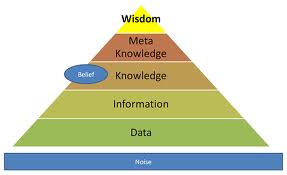
interpretation. However, in my thesis, I include a hierarchy of knowledge,
which, ultimately, must be understood as the philosophical and methodological
ground from which all knowledge follows.
Science and technology are regarded with the highest esteem, so much so that the
"good in society" and technological advancements are linked necessarily, but
that is not the only measure of a "good society." Take away the aesthetic values
of nurturing, generosity, compassion, kindness, and love etc., and the "good
society" wouldn't even exist. The hierarchy of knowledge that I am about to
suggest not only functions as a bridge connecting scientific knowledge to
"caring aesthetic values," it also speaks to the worst aspects of science and
runaway technology,-- the reduction of "goodness, love, and beauty" to
stimulus/response mechanisms, the dehumanizing of the humanities, and the
dehumanizing of humans.
From a structuralist perspective, my thesis holds that thoughts (scientific
knowledge being a subset of thought) and the physical world are both structured
along synchronic and diachronic axes. The concepts of synchronic and diachronic
are understood, typically, from a structuralist point of view; that is, the
synchronic perspective looks at a system, or structure, as a functioning given.
Investigations carried out from the synchronic perspective do not focus on the
change that is occurring within an object or institution; rather, the
investigation concentrates its focus on the a-historical condition that gives
rise to the present functioning of an object, institution or system.
Investigations carried out along the diachronic axis, on the other hand, focus
on the evolutionary currents that contribute to the ongoing change of everything
that is not considered synchronically. Traditionally, structuralists have chosen
to pursue their investigations along the synchronic axis while ignoring the
diachronic axis. In this paper I will investigate the heretofore ignored
possibility that the synchronic axis of investigation evolves diachronically. In
other words, if structure evolves into complex transformations of itself then
the diachronic experience of this evolving structure may indeed produce a
hierarchy of knowledge, -- a hierarchy of knowledge that will not only ground
scientific knowledge, but also ground ethical and spiritual knowledge as well
(spiritual knowledge being a subset ethics).
Wednesday, May 16, 2012
The World Is Alive As An Organism And At The Same Time Governed By Law
Preface And Preliminary Remarks--Structuralism Paper continued
Five Scientifically Identifiable Worldviews
April 1994
The logical positivists, from the Vienna circle of Carnap, Frank, Reichenbach,
And others, believed that science is not about discovering the true nature of
reality; rather, for this school of thought, the significance of science is
found in the establishment of the "connections between mathematical and physical
signs (which they call symbols) that can be elaborated through the external
senses and scientific instruments, concerning that experience which appears to
us as the external world." [ Seyyed Hossein Nasr, l968, p.20] Science, from this
perspective, is more about the validation of the meanings we attach to our
experience of the world, and less about validating the real (physical) world
that we inhabit.
Along these same lines, the operationalist worldview of science (Bridgman) ties
the significance of scientific knowledge to the operations that define
scientific concepts. In so far as these operations produce reliable data, the
operations, according to this viewpoint, become the ultimate matrix for
scientific knowledge. However, the viewpoint of another group of scientists
(Poincare, Duhem), contrary to the positivism and operational schools of
thought, believe that scientific concepts are irreducible mental concepts that
are subjective in nature. Science, for this group, becomes a way to
scientifically communicate the content of repeatable and reliable experiences.
Scientific knowledge, from this perspective, is conceived more as a language for
communication then knowledge of objective reality. Also, contrary to the
positivistic school of thought, the neo-Kantians (Cassirer, Margenau), hold to
the notion of irreducible concepts of science, but treat these concepts from
within the context of "as if" they existed. In this way scientific constructs
become regulative in nature and are subject to alteration as experience
dictates. This point of view stresses an ever increasing knowledge of, at
bottom, an unknowable universe.
The fifth point of view concerning science is the logical realist viewpoint,
which embraces a realistic interpretation of mathematical and physical
constructs (Northrop, Grunebaum). The emphasis here is placed on the
correspondence between the concepts of mathematical physics and a real,
knowable, aesthetic universe. Nasr informs us:
"Northrop especially seeks to show that both the Newtonian-Kantian world of
mathematical physics and the qualitative vision of nature emphasized by Goethe,
which he calls natural historical, and whose knowledge is immediate and
aesthetic rather than abstract and mathematical, are ultimately real. The world
is order or cosmos rather than chaos, one that is alive as an organism and at
the same time governed by law. But once again in this school it is emphasized
that the knowledge derived from the sciences is the way that leads us to an
ultimate knowledge of things. There is no hierarchy of knowledge, only knowledge
of the corporeal domain which determines knowledge as such." [Seyyed Hossein
Nasr, The Encounter Of Man And Nature, l968, p.20]
Tuesday, May 15, 2012
Our Children’s Children Will Inherit An Exponential Rise In Pain And Suffering
Preface And Preliminary Remarks--Structuralism Paper
April 1994
Blight weighs heavy upon the land. Exactly when this blight started and what
will follow in its wake is uncertain. We do know, however, that this blight has
physical, psychological and spiritual dimensions. It cannot be seen in its
totality, but we know its negative forms. We know that it manifests
in environmental disasters, disproportionate wealth distribution
(poverty, mental illness, homelessness), disease, war, etc. We know that it has
impacted negatively and, in some cases, completely destroyed the human beings
capacity to feel compassion, solidarity, and love. We know that rampant
materialism is fueling today's global marketplace, a marketplace that is itself
immune to any authority other than the one that applauds the dollar as an end in
itself. We also know that man-made catastrophes e.g., acid rain, burning
rainforests, polluted water, depleted ozone, endangered species (and now—global
warming) etc., are in the vanguard of the blight's devastating effects. Unless
something is done to mitigate or reverse this blight, our children's children
will inherit an exponential rise in pain, suffering, and death.
A contributing factor to this blight, though certainly not its cause, may be
found in the unstable ground upon which knowledge is based. This unstable
foundation becomes readily apparent when we ask the question, "Where is the
foundation of knowledge, the knowledge of the world that we inhabit? This
question cannot be answered without encountering incongruities, and these
incongruities, as they relate to our physical universe, spill over into what we
take to be our most reliable knowledge concerning psychological and sociological
realities. What we are left with, as a result of these incongruities, is at
least five different scientifically identifiable worldviews.
Subscribe to:
Posts (Atom)